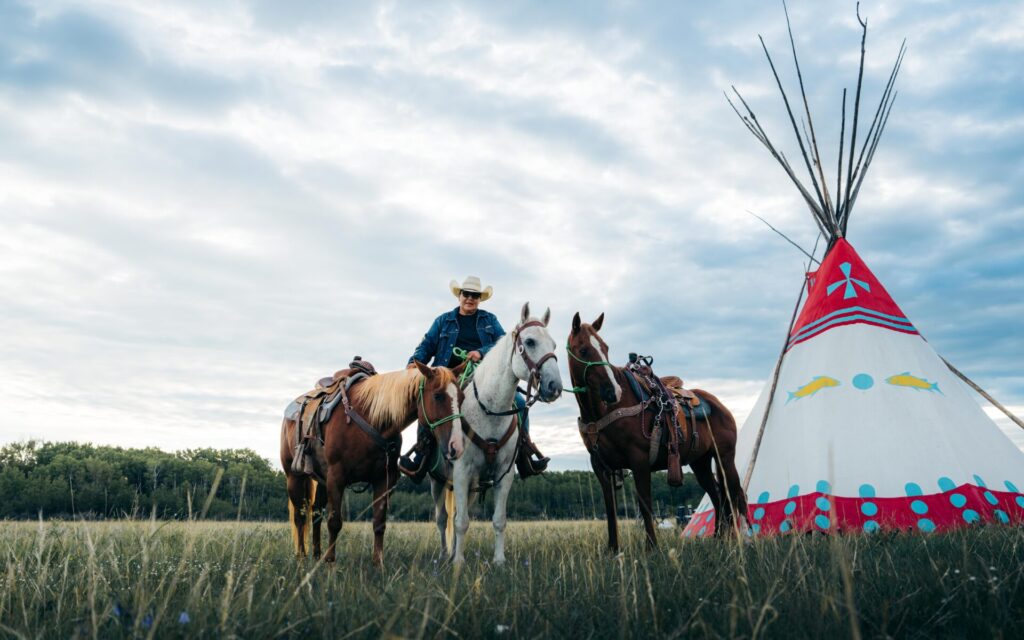
“I’m proud of my ancestors, my people, my history”
at ManyGuns Ranch, Jeanette Manyguns shares pride, history and teachings that shaped her life.
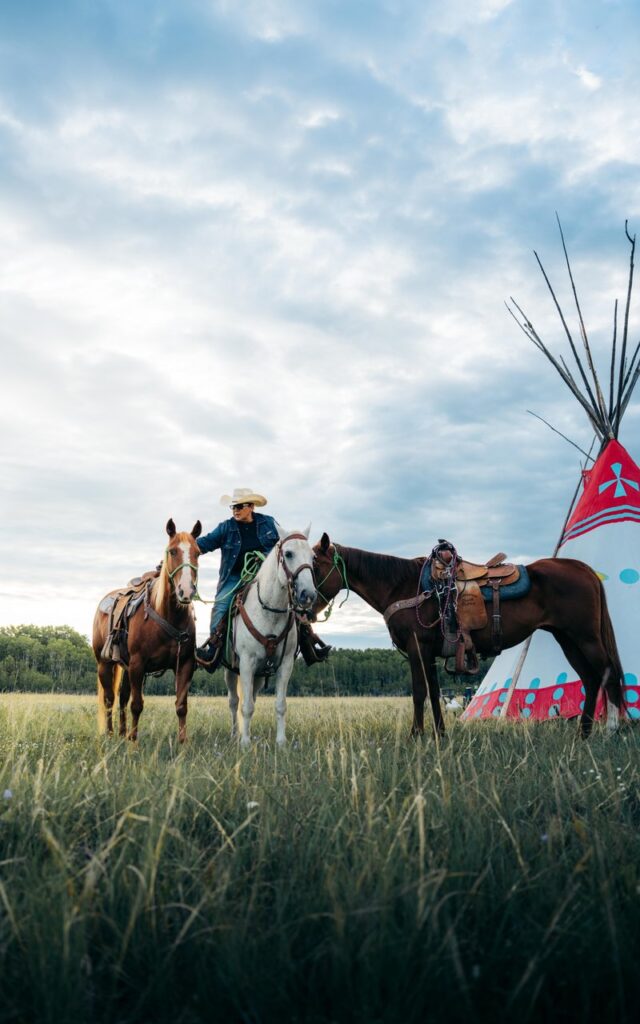
On rodeo days, a young Jeanette ManyGuns braided her hair into three strands, the way boys did. She wore a vest to flatten her chest and carried herself with the swagger of her brothers and uncles, all cowboys. “Back then, they wouldn’t let girls ride in rodeos,” she says. “So I would act like a boy and have three braids. Because back then, a lot of boys had long hair, and they always had three braids to show that they were boys.”
She was twelve, maybe thirteen, when she first slipped into the chutes under the name “J ManyGuns,” her father’s idea to mask her identity. The ruse worked. For years she rode under cover—calves, steers, and eventually bulls, winning buckles, qualifying for finals, even competing at the Canadian Finals before anyone discovered the secret.
Few things capture her story better: a girl defying the barriers of her time, a young Blackfoot woman disguising herself to prove she belonged, not just in the rodeo but in every space that told her she didn’t. To become a champion was just the icing on the cake.
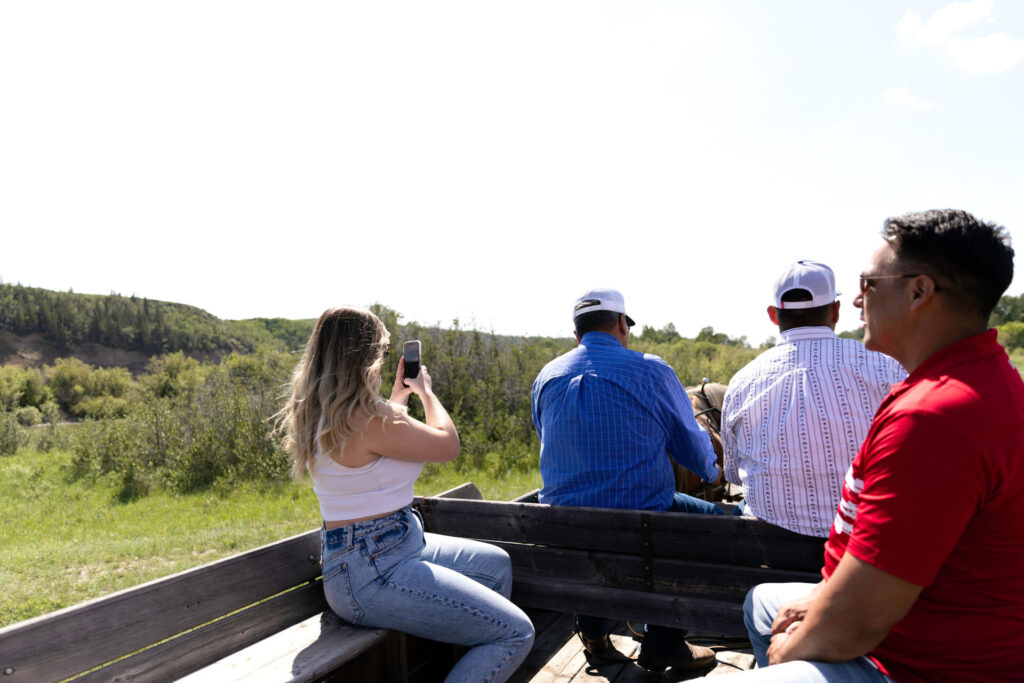
Now in her sixties, Jeanette runs Many Guns Ranch and Adventures, a tourism business on her family’s land overlooking the Bow River in Siksika Nation. The ranch is part outfitter, part classroom, part living testament to Blackfoot pride. She leads visitors on horseback through cliffs, valleys, and sacred sites along the Bow River, telling the stories passed down by her great-grandmother and grandfather. “The main thing, how I see it, is I want to educate people about who we are as Blackfoot people,” she says. “I want to educate them about the history of this land and give them experiences of how we used to live.”
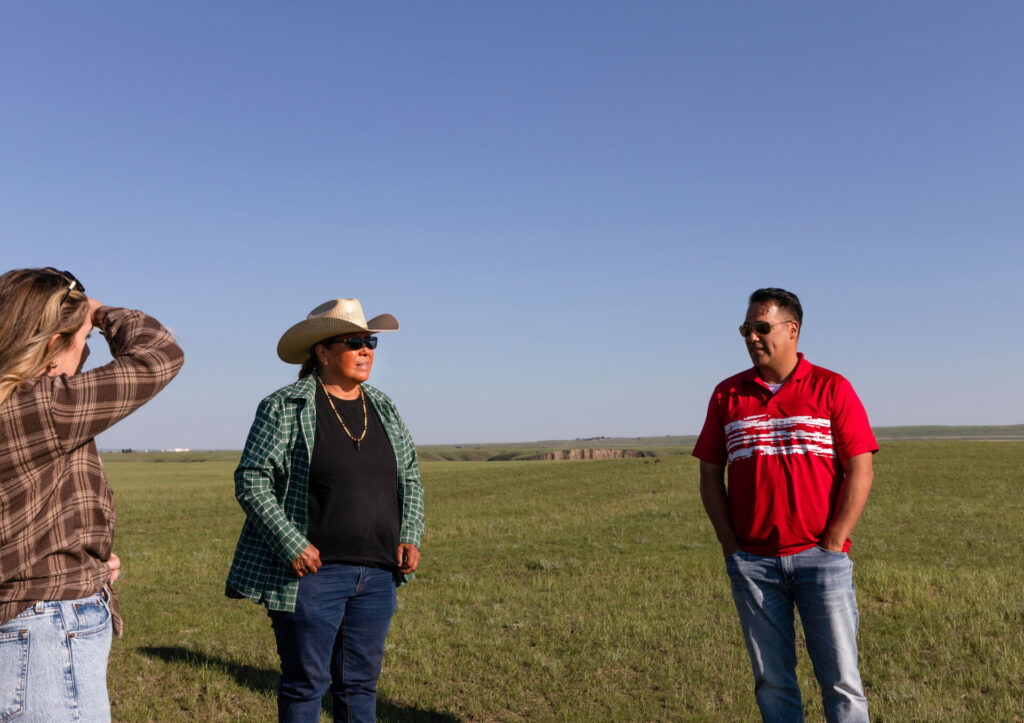
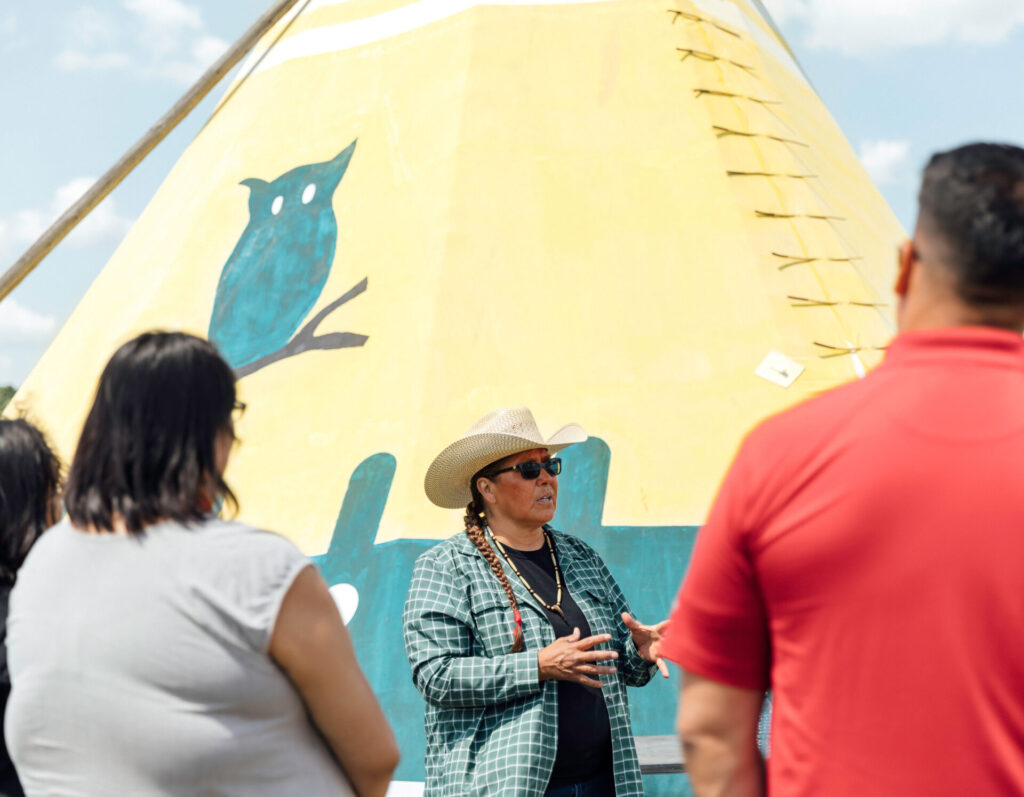
Pride threads through her words: pride in her heritage, in her rodeo victories, in her lineage. She is the great-great-great-granddaughter of Chief Many Swans, a fierce warrior who signed Treaty 7 in 1877. Her great-grandmother was the niece of Chief Crowfoot, another chief whose name was immortalized on Treaty 7. “I’m very proud to be a Blackfoot woman,” she says. “I’m proud of my ancestors, my people, my history, my culture, and my beliefs.”
Her connection to land runs deep. As a child, she followed her great-grandmother into the coulees to gather sage, sweetgrass, and berries. She remembers stories of how the Blackfoot once floated tipi poles down the Bow River from Castle Mountain, or how the prairie chickens themselves gifted her people the chicken dance. “The land is so sacred to our people,” she says. “A hundred years ago, the land was so sacred that the trees, the rocks, everything would talk back to the animals. That’s how sure the earth was.” On horseback with visitors, she points out burial sites, battlefields, and the ridges where treaty promises were signed. She does not soften the history. “We signed in 1877 when we didn’t understand English. We thought it was a peace treaty. We didn’t know we were giving up our traditional lands and really giving up everything,” she says. Still, she resists turning the rides into political lectures. “I just want to tell them the history of where I came from.”
Her pride is not abstract. It is physical, lived in her body, just as it was in her youth when she fought to ride among men. She remembers a day in Saskatchewan when a bull threw her against a fence, tearing her shirt. A rodeo clown froze, doing nothing, while her father and uncle rushed forward with a vest to shield her. “So nobody will see that I was a girl.” she says, laughing at the memory.
She remembers beating every cowboy in Blood Reserve, earning buckles and respect even as she kept her secret. “Today there’s not too many cowboys. Nobody has guts anymore,” she says with the dry humor of someone who earned hers the hard way.
And she remembers the moment the charade ended, when she was no longer allowed to ride. She doesn’t dwell on the loss, though the sting is still there. Instead, she talks about resilience, about moving to roping and breakaway events, about making it to the Indian National Finals in Los Angeles and Billings. She talks about pride.
Her resilience has always been tied to culture. For a decade, she ran a tipi interpretive center in Banff National Park, educating more than a million visitors about Blackfoot history and lifeways. She volunteered much of her time, determined to correct the record. “People need to know the real history about the Blackfoot people,” she says. “You don’t hear this from the government, who really kind of shamed us. So that’s my main purpose, to educate people about who the Blackfoot people are.”
Tourism, for Jeanette, is a bridge. Many non-Indigenous visitors arrive unsure if they’re even allowed on reserve lands. At her ranch, they are welcomed, fed, and guided, their questions met with stories instead of silence. “Tourism really gives the visitor a chance to come on the reserve, like firsthand experience,” she says. “Because a lot of people, they’re scared to come. They think they need a permit. But if you’re invited, then you’re allowed.”
That invitation is what she offers now, with the same stubborn pride that once carried her into rodeo chutes disguised as a boy. She passes her culture on to the next generation through ranch tours, films in Blackfoot with English subtitles, and through rodeo itself—once hosting all-girls rodeos to encourage young women to ride where she once could not. “I think it’s important that the youth really learn about their history. They come from the treaty and learn their language. Because once we lose our language, we lose our identity.”
The story of Jeanette ManyGuns is one of defiance, but also one of belonging. Her rodeo secret, her lineage to warriors and chiefs, her fierce protection of land and culture—they all converge into a single truth: she is proud of who she is, and she wants others to feel that pride too.
“I beat all of them,” she says with a laugh, remembering that day at the Kainai Reserve when she outrode every cowboy. The pride in her voice carries further than the arena ever did, it carries across the land she rides, into the stories she tells, and into the legacy she insists will not be forgotten.